Frozen Pipe Cleanup in Eagan, MN
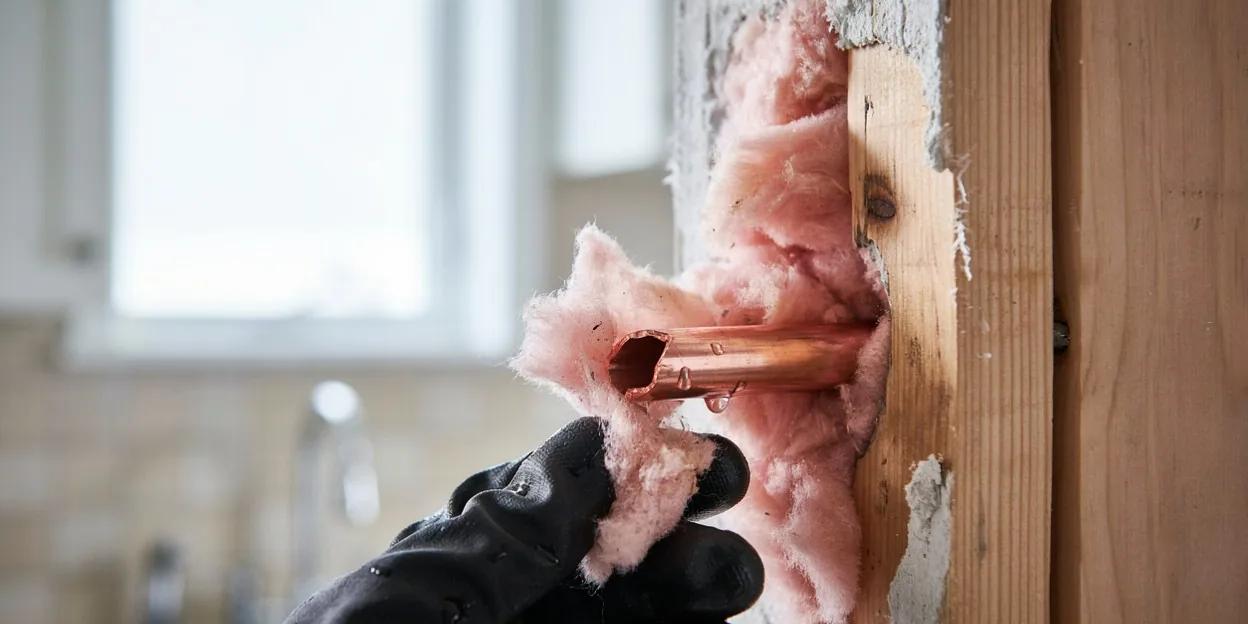
The forecast held below zero for six nights in a row. On the seventh morning the hose bib line in the garage wall had split, the thaw had started, and water was running out from under the drywall behind the workbench and into the lower-level bedroom on the other side. This site puts you through by phone to an independent local provider who cleans up after frozen pipes in Eagan and across Dakota County.
Working out how long the split has been leaking
Ice in a split line acts as its own plug, so nothing drips until the thaw, and the thaw can come a day or three after the cold snap breaks. So the crew's first question is when the water was found and when the temperature came up, because that gap tells them how long the wall has been wet. Then they confirm the main is off, pump out any standing water, and meter the wall on both sides of the split, the floor below it, and the ceiling under it if there is one.
Frozen-pipe losses start in the coldest places: the garage wall, the rim joist above the foundation, an exterior wall behind a kitchen sink, or the corner of a lower level where the heat never quite reaches. Water follows the framing down to the sill plate and across the slab under the carpet.
Shut the main, warm the house, keep the torch in the drawer
Close the main shutoff by the meter and leave it closed until a plumber has found the split, because a second frozen section can let go as the house warms up. Turn the heat up. Open the cabinet doors on exterior walls and the access panel to the tub so warm air reaches the pipes. Do not use a torch or a heat gun on a pipe inside a wall. Move anything you can carry away from the wet wall, photograph the wall and the floor, and make the call. The plumber repairs the pipe; the cleanup crew dries the house.
What the wall gives up and what it keeps
If the crew reaches the framing within a few days, the studs and the sill usually dry in place. The insulation in the wet wall almost always comes out, because it held the water against the studs the whole time, and the drywall in front of it comes with it. Carpet on the lower level often dries once the pad is gone. A garage slab dries on its own once the water is off it. After the wet material is out, structural drying runs until the readings say the wall is dry.
Water that ran from a split on the main level down into a finished lower level makes the job two jobs. The lower level gets the same treatment as a basement flooding cleanup: pad out, walls metered around the room, equipment set by the numbers.
Where Eagan houses freeze
Footings in the Twin Cities go about three and a half feet down to get below the frost, but a supply line does not always follow the footing. The split-levels and walkouts built here from the 1970s through the 1990s run water lines through the rim joist, along the garage wall to a hose bib, and across the ceiling of an unheated corner of the lower level. When the temperature holds below zero for a week, as it did during the late-January 2019 cold that dropped the airport reading below minus 25, those runs freeze first.
Houses that sit empty over the holidays are the classic case. A thermostat set to 55 keeps the living room fine and the garage wall frozen. If you travel in winter, shut the main and open a faucet, or have a neighbor walk through every couple of days.
A burst pipe is often treated as a sudden loss under a homeowner policy. Some policies handle a frozen pipe in an unheated or empty house differently, and some expect the heat to have been left on. This site cannot say what yours does. Have the crew record the discovery date, the first readings, and the photos, so the timeline reaches your adjuster on paper.
When you call about a pipe that froze
Say which wall or room the water came from, whether the main is off, and whether a plumber has been called. Mention if the house was empty and for how long, and whether the water reached a finished lower level. Call (651) 433-7589.