Dehumidifier Installation in Eagan, MN
The drying equipment left in May. By the middle of July the lower level smells like a lake cabin again, the windows in the walkout sweat every morning, and the cardboard boxes in the storage room have gone soft at the corners. Nothing is leaking. The level is simply below grade in a humid Minnesota summer. This site connects you by phone with an independent local provider who sizes and installs dehumidifiers for lower levels in Eagan and across Dakota County.
Measuring the level before choosing a unit
The provider starts with a hygrometer and a moisture meter, not a catalog. They read the relative humidity on the lower level over a day, meter the drywall along the walkout wall and the slab under the carpet, and look at where the moisture is coming from: the concrete itself, a walkout wall that weeps each spring, a sump pit without a lid, or a dryer vent that leaks into the utility room. A dehumidifier does not fix a wet wall; it keeps a dry one from getting damp again.
Then they size the unit to the square footage and the moisture load. A small portable unit from a hardware store handles a bedroom. A finished lower level of a split-level with a sump pit and a walkout usually wants a dedicated unit that drains by hose to the floor drain or the pit, so nobody has to empty a bucket twice a day in August.
What you can check yourself this week
Put a basic hygrometer on the lower level and watch it for a few days. Above 60 percent in summer means the level is working against you. Put a lid on the sump pit if it does not have one. Run the bathroom fan downstairs after showers. Look at the dryer vent joint for lint and moisture. Move boxes off the concrete onto shelving. If any wall meters wet or the walkout wall shows a stain, that is a drying job first, not a dehumidifier job, and the provider will say so.
Where the unit goes and how it drains
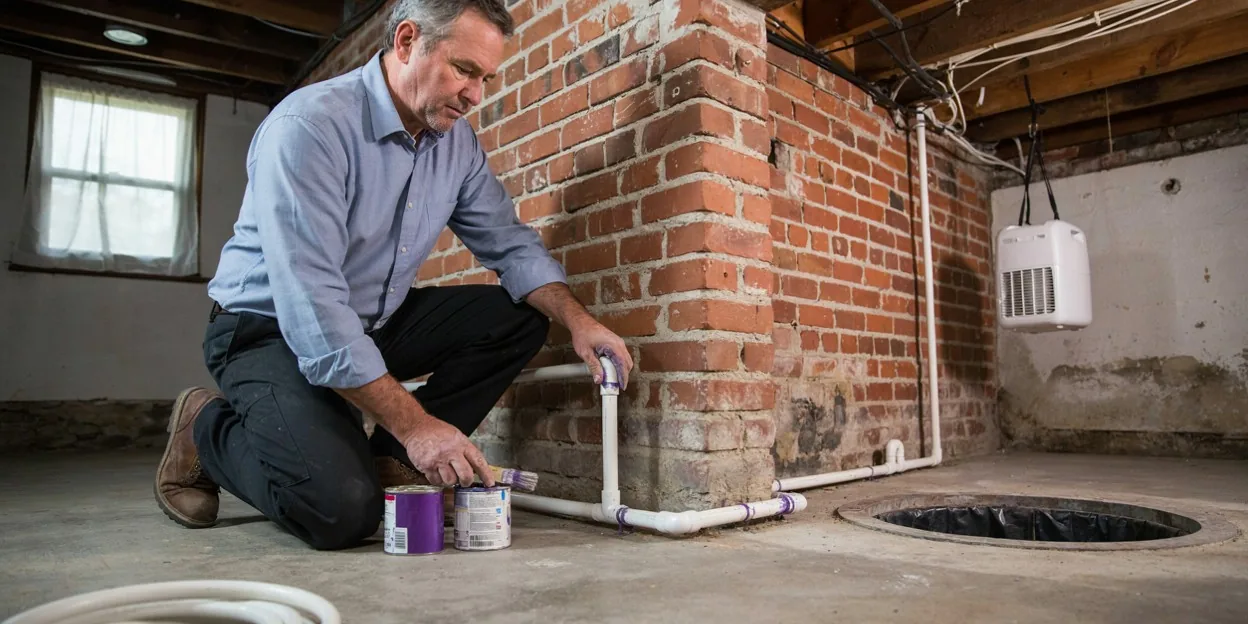
A permanent unit usually sits in the utility room near the floor drain or the sump pit, with a condensate hose run to whichever is closer, or a small condensate pump if neither is. Some are ducted into the furnace return so they dry the whole lower level through the existing registers. The provider sets the humidistat, walks you through the filter, and tells you what number to expect on the hygrometer a week later.
If the unit is going in after a water loss, it follows structural drying, not replaces it. The drying equipment brings the materials back to dry; the dehumidifier keeps them there through the summer.
Why Eagan lower levels stay damp with nothing leaking
Almost every house in Eagan built from the 1970s through the 1990s has a lower level set three or four feet into glacial till, with a concrete slab that was never sealed and a walkout wall on the downhill side. Concrete breathes moisture from the soil year round. Add a July dew point in the 70s, a sump pit that is open to the room, and a level that runs ten degrees cooler than upstairs, and the air down there sits near saturation for weeks at a time.
The problem is worst in the neighborhoods that back onto ponds and wetlands, which in Eagan is most of them; the city drains through nearly 1,200 connected basins. The walkout wall that weeps in April when the frost goes out is dry by June, but the slab keeps giving up moisture all summer. A basement flooding cleanup in July is often followed by a dehumidifier conversation in August.
A dehumidifier is an improvement, not a loss, so it is usually not something a policy pays for. If the level was dried after a covered loss, the drying equipment was part of that claim; the permanent unit afterward is on the homeowner. This site cannot say what any policy does.
When you call about a damp lower level
Say whether anything is leaking now or whether the level is just damp, whether there was a recent water loss, and whether the lower level is finished. Mention a sump pit, a walkout, and where the floor drain is. Call (651) 433-7589.